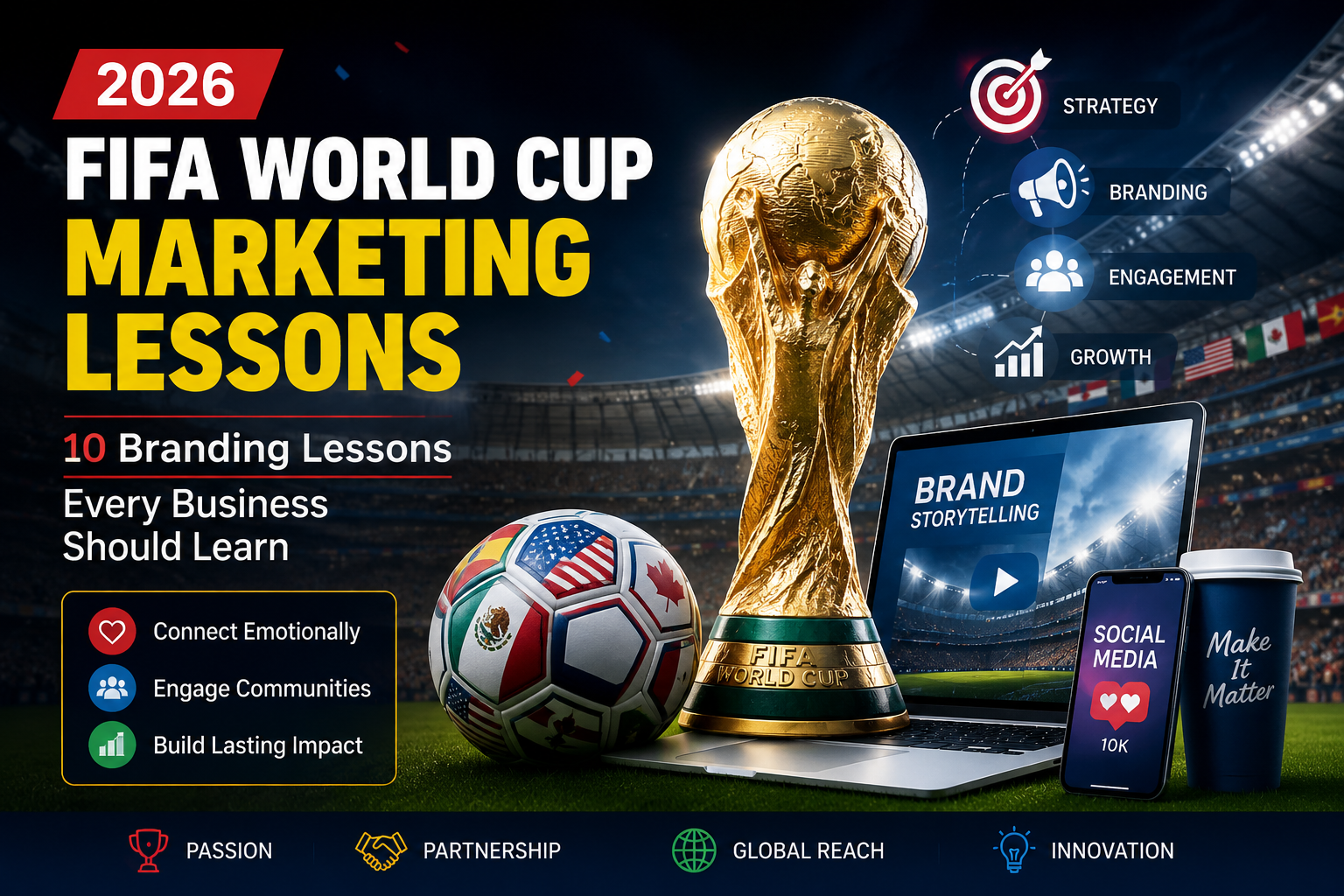
2026 FIFA World Cup Marketing Lessons Every Business Needs
2026 FIFA World Cup Marketing Lessons aren’t just for global brands.
While billions of fans watch every match, the world’s biggest companies compete for something even more valuable than trophies: attention.
Every campaign, sponsorship, social media post, and fan experience is carefully designed to build trust, create memorable moments, and strengthen brand loyalty.
The good news?
You don’t need a million-dollar marketing budget to apply these same strategies.
Whether you’re a startup, local business, eCommerce brand, or digital marketing agency, the principles behind successful World Cup campaigns can help you attract more customers, build a stronger brand, and grow your business.
In this guide, you’ll discover 10 powerful 2026 FIFA World Cup Marketing Lessons that you can start using today.
Introduction
Every FIFA World Cup is more than a football tournament—it is one of the world’s biggest marketing stages. Brands compete for attention through storytelling, sponsorships, social media, and memorable fan experiences. The 2026 FIFA World Cup offers valuable lessons that businesses of every size can apply. This guide explores practical branding and digital marketing strategies inspired by the tournament, including emotional storytelling, community building, real-time marketing, consistent branding, and customer engagement.
Lesson 1: Great Brands Sell Emotions, Not Products
Explain how this principle appeared during the World Cup and translate it into actionable advice for businesses. Use practical examples, encourage focusing on customer outcomes, and finish with a short action tip readers can implement immediately.
Lesson 2: Community Creates Loyal Customers
Explain how this principle appeared during the World Cup and translate it into actionable advice for businesses. Use practical examples, encourage focusing on customer outcomes, and finish with a short action tip readers can implement immediately.
Lesson 3: Storytelling Makes Brands Memorable
Explain how this principle appeared during the World Cup and translate it into actionable advice for businesses. Use practical examples, encourage focusing on customer outcomes, and finish with a short action tip readers can implement immediately.
Lesson 4: Real-Time Marketing Wins Attention
Explain how this principle appeared during the World Cup and translate it into actionable advice for businesses. Use practical examples, encourage focusing on customer outcomes, and finish with a short action tip readers can implement immediately.
Lesson 5: Sponsorship Is About Experience
Explain how this principle appeared during the World Cup and translate it into actionable advice for businesses. Use practical examples, encourage focusing on customer outcomes, and finish with a short action tip readers can implement immediately.
Lesson 6: Social Media Starts Conversations
Explain how this principle appeared during the World Cup and translate it into actionable advice for businesses. Use practical examples, encourage focusing on customer outcomes, and finish with a short action tip readers can implement immediately.
Lesson 7: Consistency Builds Trust
Explain how this principle appeared during the World Cup and translate it into actionable advice for businesses. Use practical examples, encourage focusing on customer outcomes, and finish with a short action tip readers can implement immediately.
Lesson 8: Data Drives Better Decisions
Explain how this principle appeared during the World Cup and translate it into actionable advice for businesses. Use practical examples, encourage focusing on customer outcomes, and finish with a short action tip readers can implement immediately.
Lesson 9: Create Experiences, Not Just Ads
Explain how this principle appeared during the World Cup and translate it into actionable advice for businesses. Use practical examples, encourage focusing on customer outcomes, and finish with a short action tip readers can implement immediately.
Lesson 10: Think Long Term, Not Campaign to Campaign
Explain how this principle appeared during the World Cup and translate it into actionable advice for businesses. Use practical examples, encourage focusing on customer outcomes, and finish with a short action tip readers can implement immediately.
Conclusion
The biggest lesson is that successful marketing is about earning attention and trust consistently. Businesses that combine strategy, creativity, and customer-focused messaging are more likely to grow.
CTA
Need help growing your brand? Brandverse Digital helps businesses with SEO, Google Ads, social media marketing, branding.
1. What marketing lessons can businesses learn from the 2026 FIFA World Cup?
Businesses can learn the importance of emotional storytelling, consistent branding, real-time marketing, community engagement, customer experience, and data-driven decision-making. These strategies help build trust, increase brand awareness, and improve customer loyalty.
2. Why is the FIFA World Cup considered a marketing success?
The FIFA World Cup brings together billions of viewers worldwide, making it one of the largest global marketing platforms. Brands use the event to connect with audiences through storytelling, sponsorships, digital campaigns, and memorable fan experiences.
3. How can small businesses use FIFA World Cup marketing strategies?
Small businesses can apply the same principles by creating engaging social media content, sharing customer stories, running event-based promotions, building a strong community, and focusing on long-term brand trust instead of short-term sales.
4. What is sports marketing?
Sports marketing is the promotion of products, services, or brands through sporting events, teams, athletes, or fan experiences. It helps businesses increase brand visibility, engage audiences, and build emotional connections.
5. Why is storytelling important in marketing?
Storytelling helps brands connect with customers on an emotional level. Instead of simply promoting products, businesses can share meaningful experiences that make their brand more memorable and trustworthy.
6. How does real-time marketing help businesses grow?
Real-time marketing allows businesses to join trending conversations, respond quickly to current events, and create relevant content. This increases engagement, visibility, and the chances of reaching new audiences.
7. What makes a successful branding strategy?
A successful branding strategy combines a clear brand identity, consistent messaging, customer-focused communication, quality products or services, and ongoing engagement across multiple channels.
8. Can digital marketing agencies apply FIFA World Cup marketing lessons?
Yes. Digital marketing agencies can use these lessons to improve content marketing, social media campaigns, paid advertising, branding, customer engagement, and lead generation strategies for their clients.
9. Why do brands invest so much in major sporting events?
Major sporting events provide unmatched global exposure and emotional engagement. Brands invest because these events help increase awareness, strengthen customer relationships, and create long-term brand recognition.
10. How can Brandverse Digital help businesses grow?
Brandverse Digital helps businesses grow through SEO, Google Ads, social media marketing, branding, content marketing, and performance-driven digital strategies tailored to each business’s goals.
Is the 2026 FIFA World Cup only relevant for large brands?
No. While global brands invest heavily in the tournament, the underlying marketing principles—such as storytelling, community building, consistency, and customer engagement—can be applied by businesses of any size with any budget.
